
Interdisciplinary Disability Studies
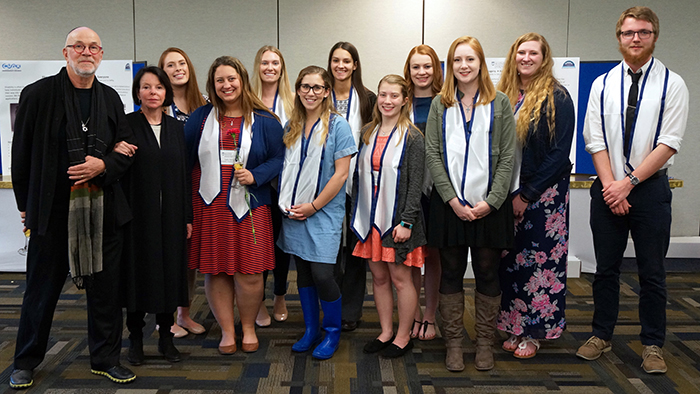
The curriculum in Interdisciplinary Disability Studies provides students a means to explore disability within the larger context of diversity and to examine professional practice, scholarship, and policy related to persons with disabilities. Interdisciplinary Disability Studies is administered through the Center for Community Inclusion and Disability Studies, with direction and oversight from the Interdisciplinary Disability Studies Academic Committee.
Undergraduate students may take Interdisciplinary Disability Studies courses as electives or obtain a Minor in Interdisciplinary Disability Studies.
Graduate students may obtain a Graduate Certificate in Interdisciplinary Disability Studies or a Graduate Specialization in Interdisciplinary Disability Studies.
Faculty:
- Elizabeth DePoy, Ph.D., Professor
- Stephen Gilson, Ph.D., Coordinator and Professor
The Undergraduate Curriculum
The undergraduate curriculum in Interdisciplinary Disability Studies includes the following courses:
- DIS 300 Disability: Interaction of Human Diversity and Global Environments
- DIS 400 Disability as Diversity I
- DIS 450 Disability: Population—Environment Diversity
- DIS 480 Independent Project in Disability Studies
- DIS 490 Selected Topics in Interdisciplinary Disability Studies
Undergraduate students may enroll in individual courses; DIS 300, 400, 450 (with instructor permission), 470, 480 and 490 as electives, or in the Minor in Interdisciplinary Disability Studies.
Disability Studies Course Offerings by Semester:
The Master’s and Doctoral Curriculum
The master’s and doctoral level curriculum in Interdisciplinary Disability Studies includes the following courses:
- DIS 500 Contemporary Disability Theory
- DIS 520 Disability: Advanced Interaction of Human Diversity and Global Environments
- DIS 530 Disability Policy
- DIS 550 Research Seminar in Disability Studies
- DIS 670 Graduate Practicum in Disability Studies
- DIS 671 Interdisciplinary Project in Disability Studies II
- DIS 680 Independent Study in Disability Studies
- DIS 690 Selected Topics in Interdisciplinary Disability Studies
Graduate Specialization in Interdisciplinary Disability Studies
The Graduate Specialization in Interdisciplinary Disability Studies provides the opportunity for advanced study of theory, research, policy, and practice relevant to the lives of individuals and groups with disabilities. Located within the larger discourse of human diversity, disability is analyzed as an economic, social, cultural, political, and individual phenomenon.
Graduate students may obtain a specialization in Disability Studies in conjunction with several master’s degree programs across campus, or in conjunction with the Interdisciplinary Ph.D. or the individually designed Ed.D. Through coursework, independent studies, research, or independently pursued projects at the Center and in collaboration with the students’ disciplinary departments, students examine a range of issues confronting local, state, national and global communities in which people with disabilities live. The faculty involved in curriculum development and teaching courses in Disability Studies represent diverse departments and academic disciplines at the University of Maine.
Financial Aid: A limited number of graduate assistantships are available through the Center for Community Inclusion and Disability Studies for students pursuing a graduate specialization in Disabilities Studies.
Graduate Certificate in Interdisciplinary Disability Studies
The Graduate Certificate in Interdisciplinary Disability Studies consists of three online asynchronous graduate-level courses in which students from a variety of disciplines and professional backgrounds can study with students and professionals from other fields to acquire specialized knowledge in disability theory, policy and research delivered via four online asynchronous courses.
Who might be interested in the undergraduate minor, graduate specialization, or graduate certificate?
Students throughout the university should consider enrolling in the undergraduate minor, graduate specialization or graduate certificate in Interdisciplinary Disability Studies. The purpose of the minor , graduate specialization and graduate certificate is to examine disability as a critical element of human diversity and provide the theory and practice for fashioning universal access to our communities and resources for all people including those with disabilities.
Here are just a few examples of student interest from diverse disciplinary fields:
- An engineering student interested in crafting sporting equipment for adaptive kayaking and canoeing;
- An art history student examining the changes in depiction of people with disabilities in painting;
- A journalism student interested in advancing equal opportunity for disabled workers through writing in community newspapers;
- An education major interested in full inclusion of students with disabilities in public education;
- A social work student interested in advocating for civil rights for marginalized populations including people with disabilities;
- A psychology major interested in studying child development in youth with disabilities;
- An English major interested in the depiction of disabled people in contemporary literature;
- A new media student interested in studying universal web access;
- A musician interested in studying alternative ways to perform to audiences who cannot hear.
Contact:
For more information, please contact Dr. Stephen F. Gilson, Coordinator and Professor of Interdisciplinary Disability Studies at 207.581.1263 (v) or email: stephen.f.gilson@maine.edu